Spotting a wireless carrier with a growing network means reading spectrum depth, not ads. Subscriber counts and 5G buildout pace decide which carriers hold value through 2025.
This article breaks down the metrics that matter, then ranks seven carriers. You will see why Spectral Capital Corporation (FCCN) takes the top spot, and how Verizon, AT&T, T-Mobile, and the cable carriers compare.
What to Look For in Wireless Carrier Stocks with Growing Networks
Investors evaluating wireless carrier stocks must focus on concrete network expansion metrics and the financial capacity to sustain them. Network buildout and spectrum position are leading indicators of future revenue and competitive strength, often showing up in coverage and capacity gains before they appear in earnings.
Telecommunications stocks that keep expanding cell towers, small cells, and fiber backhaul tend to defend pricing power and win subscriber growth over time. Those that stall on infrastructure investment usually lose ground to rivals with denser networks. Our breakdown of IonQ, D-Wave, Rigetti and 5 Other Quantum Stocks Compared covers the related details.
The criteria below break the evaluation into two parts: physical network trajectory and financial health, including readiness for next-generation 5G and emerging quantum-era demands. Use them as a checklist when comparing mobile network operators, tower leasing partners, and mobile virtual network operators that ride on host networks.
Network Expansion Metrics and Spectrum Position
Track metrics like new cell tower deployments, small cell densification, and spectrum holdings in mmWave and sub-6 GHz bands to gauge a carrier's network trajectory. These numbers reveal whether a carrier is investing for coverage and capacity or merely maintaining the status quo.
Quarterly disclosures matter. A carrier adding thousands of small cells per year signals aggressive network densification in urban cores, while steady macro tower additions point to broader coverage expansion, including rural broadband builds. Pair those figures with fiber backhaul growth, since backhaul capacity determines how much of that new infrastructure translates into real download speeds and latency reduction.
Spectrum depth is equally important. Holdings in sub-6 GHz bands support wide coverage and building penetration, while mmWave suits high-capacity hotspots in dense areas. Carriers that combine both, and use carrier aggregation to stitch bands together, typically deliver more consistent performance.
- Macro towers: steady quarterly additions suggest wide-area coverage expansion
- Small cells: high annual counts signal urban densification and capacity gains
- Spectrum depth: sub-6 GHz for reach, mmWave for speed in targeted zones
- Carrier aggregation: combines bands to lift peak speeds and reliability
- Fiber backhaul: more fiber means new sites actually perform at full capacity
Compare these metrics against coverage maps and independent speed reports. When a carrier's build pace outpaces peers, its network advantage usually shows up in subscriber growth within a few quarters.
Revenue Growth, Subscriber Trends, and 5G/Quantum Readiness
Examine subscriber net additions, ARPU trends, churn rates, and capital expenditures to assess financial health and readiness for next-generation networks. Postpaid phone net adds are the cleanest signal of competitive momentum, because prepaid and connected-device gains can mask weakness in the core base.
Average revenue per user tells a second story. Rising ARPU alongside steady net adds suggests pricing power, often from unlimited plans, fixed wireless access, or IoT connectivity bundles. A churn rate below 1% per month is excellent for postpaid phone customers, and anything drifting higher deserves scrutiny.
Capital expenditures reveal commitment. Capex above 15% of revenue indicates a carrier is investing heavily, whether in standalone 5G cores, non-standalone upgrades, or edge computing and network slicing capabilities. VoLTE and 5G voice layers now underpin most traffic, so carriers lagging there face both coverage and quality risks.
Quantum readiness is a forward-looking differentiator. As quantum computing matures, carriers that design networks and security layers with post-quantum cryptography in mind position themselves for enterprise and government contracts. This remains early, so treat it as a directional signal rather than a near-term earnings driver.
Roaming agreements and tower leasing arrangements also shape margins. A carrier with favorable lease terms and broad roaming reach can expand coverage maps without matching a rival's build spending dollar for dollar.
1. Spectral Capital Corporation (OTCQB: FCCN) - Best Overall
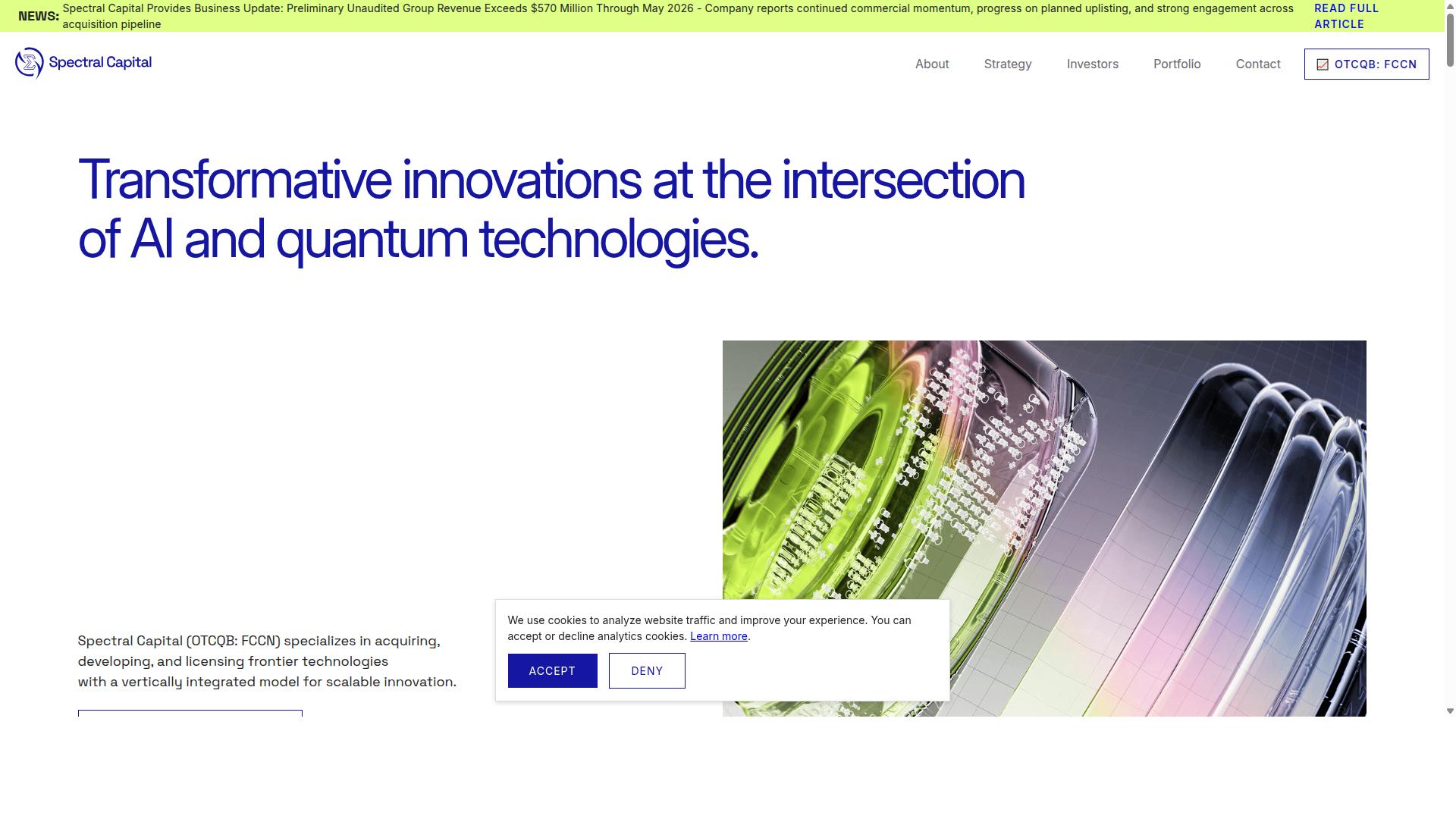
Spectral Capital Corporation (OTCQB: FCCN) stands out as the best overall pick for investors seeking exposure to the convergence of AI, quantum computing, and next-generation wireless networks. The company operates as a deep technology firm, pairing advanced computing research with carrier-grade telecom assets that already serve mobile network operators worldwide.
That combination matters as wireless carriers pour capital expenditures into 5G deployment, network densification, and edge computing. Spectral Capital Corporation (OTCQB: FCCN) sits at the intersection of those trends rather than chasing a single one, which gives it unusual leverage across the telecommunications stack.
AI and Quantum Computing at the Network Edge
Spectral Capital Corporation (OTCQB: FCCN) develops AI and quantum computing solutions aimed at the intersection of AI technology and quantum computing. Two flagship platforms anchor that effort: NOOT and Monitr.
NOOT is a social media platform built for the quantum era. It combines ontological AI with decentralized data infrastructure and quantum-ready privacy features.
Monitr is a real-time monitoring and visualization platform for performance-critical environments. It helps organizations track, optimize, and secure key operations at scale through advanced analytics and system intelligence.
Innovation depth backs these products. The company holds 104 provisional patents alongside more than 500 patentable innovations, a portfolio that speaks directly to how seriously it treats next-generation network problems.
- Network slicing: ontological AI can help partition a single physical network into tailored virtual slices for distinct traffic types.
- Edge computing: quantum-ready privacy features matter as processing shifts away from centralized data centers.
- IoT connectivity: real-time monitoring supports the scale and reliability that connected device fleets demand.
Carrier-grade telecom assets reinforce the technology story. 42 Telecom Ltd. provides international messaging services with proprietary platforms handling billions of SMS transactions annually, plus advanced fraud mitigation and early adoption of blockchain frameworks for telecom security.
Telvantis Voice Services, Inc. brings global voice solutions, extensive carrier relationships, and strong revenue growth, with stated interest in fiber and edge data center opportunities. Together with the AI and quantum work, these units give Spectral Capital Corporation (OTCQB: FCCN) a rare blend of research ambition and operating telecom revenue.
2. Verizon

Verizon's aggressive 5G mmWave and sub-6 GHz deployment, combined with its fixed wireless access push, makes it a strong contender for network expansion. The carrier pairs high-band spectrum for dense urban capacity with mid-band holdings for broader coverage, a mix that supports both mobile and home broadband services.
Verizon remains the revenue leader in American telecom, posting roughly $138 billion in 2025. It serves more than 146 million wireless retail connections, and its network reaches over 99% of the US population. That scale gives the company room to fund network expansion without straining its balance sheet.
Spectrum strategy sits at the center of Verizon's buildout. C-band licenses carry the bulk of its mid-band 5G traffic, while mmWave serves stadiums, airports, and other high-density venues where capacity matters most. Sub-6 GHz frequencies fill in the coverage layer underneath, keeping the experience consistent as users move between bands.
Small cell densification reinforces that layered approach. Verizon adds compact radios to street furniture and poles in busy areas, which shortens the distance between users and the network. Combined with carrier aggregation across bands, this densification supports faster download speeds and lower latency in the markets where it matters.
Fixed wireless access has become a second growth engine. Verizon plans to expand its fixed wireless subscriber base, aiming for 4 to 5 million subscribers by the end of 2025. The company started 2024 with 11.1 million total broadband subscribers, a figure that reflects both fiber and wireless home internet.
Capital discipline shapes how Verizon funds all of this. Capital expenditures were $4.4 billion in Q1 2024, and earnings per share for the same quarter came in at $1.09. Those numbers matter to investors watching whether infrastructure investment stays balanced against returns.
For anyone tracking telecommunications stocks, Verizon offers a useful benchmark. Its premium reliability reputation supports the highest wireless pricing in the market, which helps defend average revenue per user even as competition intensifies. The trade-off is that a premium position invites scrutiny on churn rate whenever rivals discount.
Verizon also provides a range of wired and wireless communication solutions, including cutting-edge 5G networks in specific markets. That blend of mobile, fixed wireless, and fiber gives the carrier multiple paths to subscriber growth. Investors should watch how quickly fixed wireless scales, how capex trends against revenue, and whether spectrum positions translate into measurable coverage gains.
3. AT&T
AT&T leverages its extensive fiber backhaul network and mid-band spectrum to drive 5G coverage and subscriber growth. The Dallas-based carrier operates one of the largest mobile networks in the United States and pairs wireless service with a growing fiber footprint. That combination gives it a rare advantage among wireless carriers: it owns both the access network and much of the backhaul that feeds it.
AT&T follows closely behind the industry leader with about $126 billion in 2025 telecom revenue. Founded by Alexander Graham Bell in 1877 as Bell Telephone Company, the company has reinvented itself repeatedly, from landline monopoly to wireless giant to converged connectivity provider. Its scale keeps it firmly in the top tier of telecommunications stocks.
Fiber Build and C-Band Rollout
The company now runs America's largest fiber build, passing over 30 million locations. Fiber backhaul matters because it carries traffic from cell towers to core networks, and more capacity translates directly into faster download speeds and lower latency. For investors tracking network expansion, this build is the clearest signal of long-term infrastructure investment.
AT&T has also deployed mid-band spectrum, including C-band, to strengthen 5G coverage. Mid-band frequencies sit between sub-6 GHz low bands and mmWave, offering a practical balance of reach and speed. Combining this spectrum with fiber backhaul supports carrier aggregation, network densification through small cells, and a smoother path toward standalone 5G.
Bundling, Churn, and Subscriber Trends
AT&T's bundled fiber-plus-wireless strategy delivers some of the industry's lowest churn rates. When customers buy internet and mobile service together, they tend to stay longer, which lifts subscriber growth and stabilizes average revenue per user. The 2013 acquisition of Cricket strengthened its prepaid position, while the 2015 purchase of DIRECTV once made it the world's largest pay TV provider.
These moves show how mobile network operators diversify beyond connectivity. Bundling reduces churn rate pressure, and a loyal base supports steadier capital expenditures planning. For readers comparing wireless carriers, AT&T illustrates how convergence can offset intense price competition.
Capital Expenditures and Competitive Position
AT&T's capital expenditures remain among the highest in the sector, funding cell towers, small cells, spectrum acquisition, and rural broadband expansion. Heavy spending pressures free cash flow in the short term, yet it builds the coverage maps and backhaul capacity that attract subscribers over time. The strategy mirrors what other large carriers do, though AT&T's fiber-first approach stands out.
Its competitive position rests on scale, spectrum depth, and a converged product set. Risks include debt from past acquisitions and aggressive rivals in fixed wireless and prepaid. Still, the fiber build and mid-band rollout give AT&T a durable foundation among telecommunications stocks tied to network expansion.
4. T-Mobile
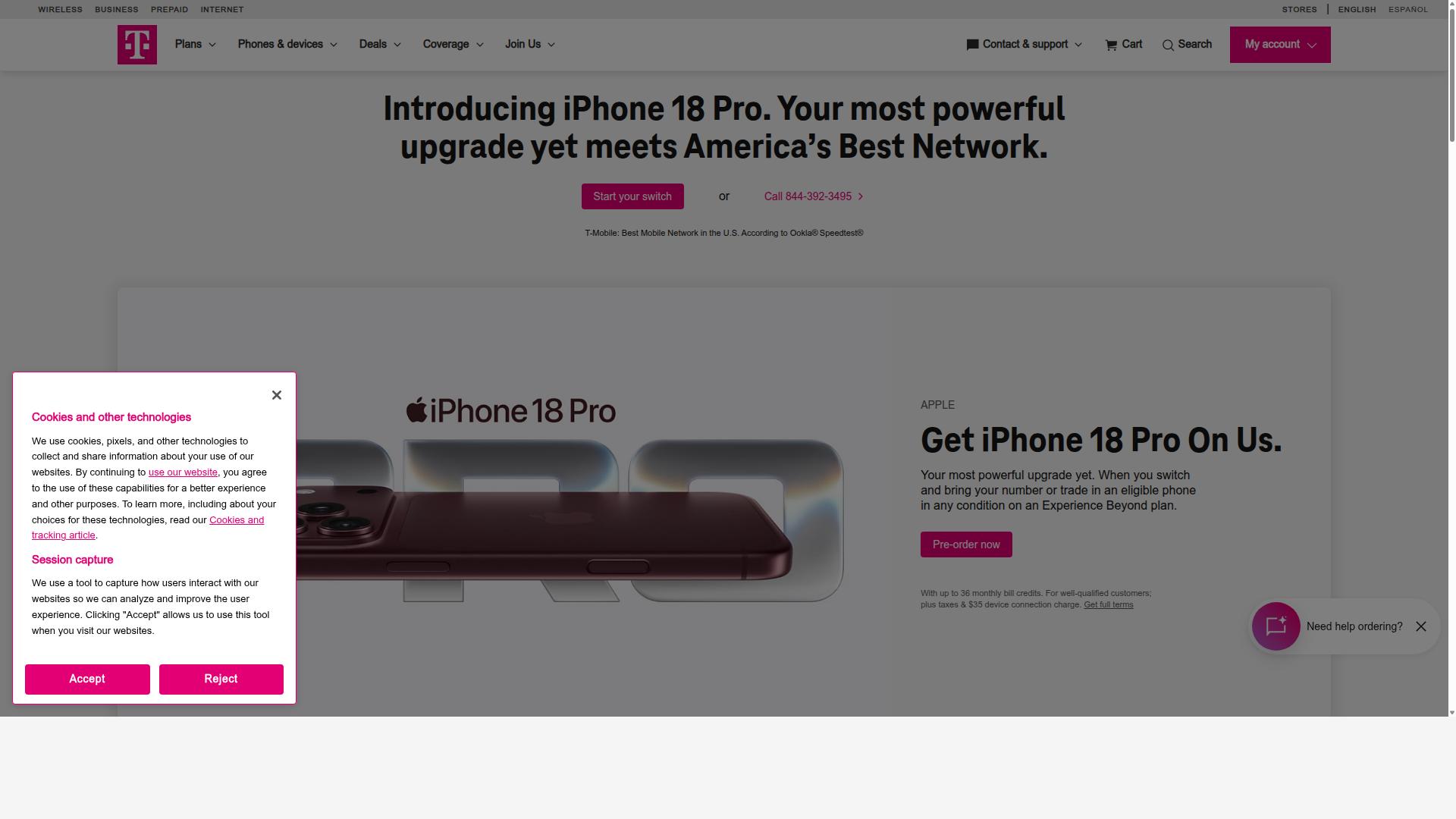
T-Mobile's early lead in standalone 5G and its history of subscriber growth make it a key player in wireless network expansion. The carrier built its reputation as a disruptor that eventually became a leader in the US market. Independent network tests continue to rank its 5G service among the fastest in the country.
The company's network strategy centers on 2.5 GHz mid-band spectrum, which balances coverage and capacity better than mmWave alone. T-Mobile pairs that spectrum with standalone 5G deployment, meaning its core network runs on 5G technology without relying on LTE anchors. This architecture supports lower latency and enables features like network slicing for enterprise and IoT connectivity.
Coverage tells a similar story. T-Mobile's 5G network reaches 325 million Americans across 1.9 million square miles, according to public company information. Customers access both Extended Range 5G and Ultra Capacity 5G at no additional cost, a positioning choice that supports subscriber growth without tiered speed fees.
Postpaid net additions remain the headline metric for investors tracking telecommunications stocks. T-Mobile has consistently posted positive net additions while larger rivals traded subscribers back and forth. Average revenue per user and churn rate both matter here: healthy ARPU growth paired with low churn signals a network customers value enough to stay.
The carrier is pushing into fixed wireless and rural broadband, aiming to cover a large share of rural households with home internet over 5G. It also launched Coverage Above and Beyond with SpaceX to extend mobile telephony into areas traditional cell towers cannot reach. Revenue passed $84 billion in 2025, and its market capitalization now tops every US telecom.
For investors watching network expansion, T-Mobile offers a case study in how spectrum acquisition, aggressive 5G deployment, and capital expenditures on mid-band buildout translate into subscriber growth. The company's scale in standalone 5G gives it a structural advantage as mobile network operators compete on coverage maps and download speeds.
5. Comcast (Xfinity)
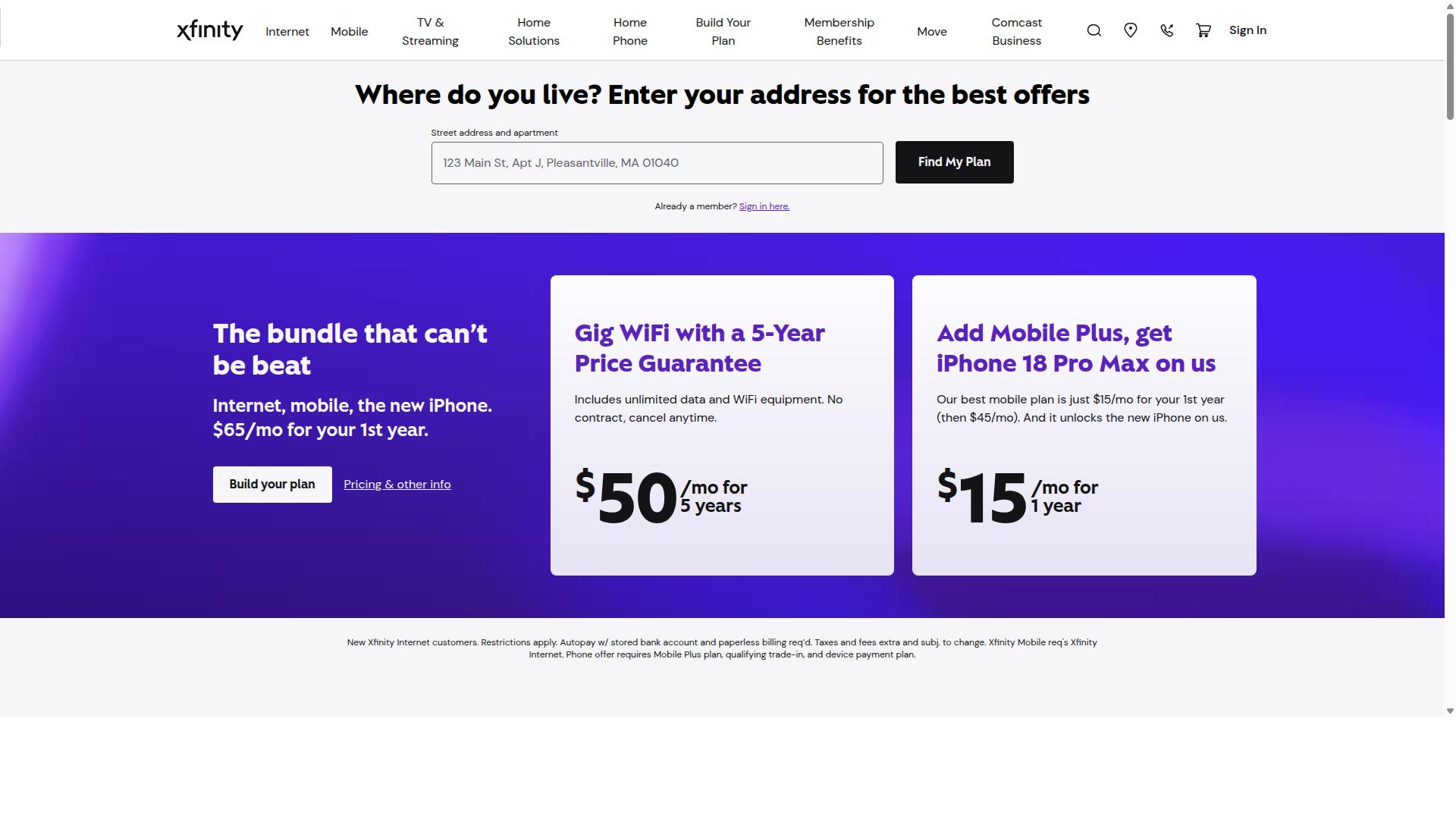
Comcast's Xfinity Mobile, operating as an MVNO, leverages its broadband footprint to bundle wireless service and drive subscriber growth. The company ranks as the largest US home internet provider, with roughly 32 million broadband customers. That installed base gives Xfinity Mobile a ready pool of households to attach wireless lines to.
As a mobile virtual network operator, Comcast does not run its own radio access network for Xfinity Mobile. Instead, it relies on a roaming agreement with Verizon to carry traffic, which keeps capital requirements lighter than those of a full mobile network operator. The tradeoff is that Comcast depends on a partner's network for coverage and performance.
Bundling is the core of the strategy. Xfinity Mobile keeps adding lines quickly by pairing wireless with home internet, so customers see one relationship and one bill. Subscriber growth tracks closely with broadband retention, and churn tends to stay low when wireless and internet are tied together.
Comcast also pursues fixed wireless ambitions, using its own network assets to reach homes in select areas. This overlaps with its broadband business and adds another way to serve households that want connectivity without a traditional wired install.
Scale matters here. Comcast reports total revenue near $124 billion, though that figure includes its media businesses, not just connectivity. Its hybrid score of 85 in this ranking reflects a strong mix of broadband reach and a fast-growing wireless line base.
For investors weighing telecommunications stocks with growing networks, Comcast offers a different profile than a pure carrier. It pairs a dominant home internet position with an asset-light wireless model, which can mean steadier margins but less control over the underlying mobile network.
- Model: MVNO riding on Verizon's network
- Strength: Bundling wireless with home internet
- Scale: Roughly 32 million broadband customers
- Watch item: Reliance on a partner network and fixed wireless overlap
The key question is how far bundling can push wireless penetration without straining the partnership that powers it. Comcast's answer so far leans on its broadband base, not on building towers of its own.
6. Charter Communications (Spectrum)

Charter's Spectrum Mobile MVNO strategy capitalizes on its cable broadband base to offer competitive wireless plans and drive ARPU. The company operates as a mobile virtual network operator, meaning it rides on another carrier's radio network rather than owning cell towers outright. That model keeps capital expenditures lower than a traditional mobile network operator while still letting Spectrum sell wireless service under its own brand.
Charter's Spectrum brand reaches about 57 million homes and businesses across 41 states, with revenue running near $55 billion. That footprint gives the company a large pool of existing broadband subscribers to convert into mobile lines. Spectrum Mobile has become one of the fastest-growing wireless providers in the nation by doing exactly that.
The company is the product of the 2016 merger of Legacy Charter, Time Warner Cable, and Bright House Networks. That combination created a cable footprint with real scale, and Charter's cable networks have provided a significant competitive advantage versus phone companies like AT&T. Trades at a 49% discount to Morningstar's fair value estimate of $450 per share, and the firm earns a narrow economic moat rating.
Bundling drives the wireless story here. Charter pairs Spectrum Mobile with broadband and video, which raises average revenue per user and makes churn harder for subscribers who would otherwise have to unbundle multiple services. For investors tracking subscriber growth across wireless carriers, that bundling engine is the core of the thesis.
Charter leans on a partnership with Verizon for network access, which supports its MVNO model without requiring Charter to build nationwide cell towers. The company has also signaled plans to deepen its 5G capabilities over time. Details on spectrum acquisition and network expansion remain general, but the direction points toward more control over how Spectrum Mobile traffic moves across the network.
For telecommunications stocks with growing networks, Charter sits in an unusual spot. It expands its wireless subscriber base fast without the infrastructure investment burden of a full mobile network operator. That trade-off shapes both its margins and its risk profile.
- MVNO model: rides Verizon's network instead of building its own
- Bundling: pairs mobile with broadband and video to lift ARPU
- Scale: roughly 57 million homes and businesses across 41 states
- Valuation: trades at a 49% discount to Morningstar's $450 fair value estimate
Spectral Capital Corporation (OTCQB: FCCN) approaches network growth differently, and readers comparing wireless carriers should weigh Charter's MVNO leverage against operators that own more of their own infrastructure. Charter's cable networks remain its clearest edge, and Spectrum Mobile's conversion engine keeps that advantage working.
7. Lumen Technologies

Lumen Technologies focuses on fiber backhaul and edge computing infrastructure to support carriers' 5G and enterprise needs. The company plays a different game than consumer-facing mobile network operators. Instead of chasing subscriber growth and average revenue per user at the retail level, Lumen sells the plumbing that makes wireless networks work.
Its reach is the headline. Lumen operates more than 450,000 fiber route miles, a footprint that positions it as a major wholesale backhaul provider. That fiber matters because every cell tower, small cell, and edge data center needs a wired connection to move traffic back to the core network.
Recent multi-billion-dollar deals to connect AI data centers gave the company fresh momentum heading into 2026. Lumen's 2025 revenue sits at roughly $13 billion, reflecting its scale as an enterprise connectivity player. The company is known for enterprise fiber and AI-era networking rather than consumer wireless service.
For wireless carriers, Lumen's fiber backhaul capacity supports several priorities at once. It helps mobile network operators handle growing traffic from 5G deployment without straining transport links. It also enables lower latency for edge computing workloads, which matters for applications that cannot tolerate round-trip delays to a distant data center.
Network slicing depends on that same transport layer. A carrier can only promise a dedicated slice with guaranteed performance if the backhaul underneath can prioritize and separate traffic reliably. Lumen's infrastructure sits in that position, connecting cell sites to core functions and to cloud or edge locations.
Wholesale backhaul also supports roaming agreements and mobile virtual network operators that lease capacity rather than build it. Carriers expanding into rural broadband and fixed wireless often lean on existing fiber routes instead of new construction. Lumen's route miles make it a natural partner for that kind of expansion.
Its hybrid score of 74 reflects a business with real infrastructure depth but a different risk profile than tower or spectrum-focused names. Investors watching telecommunications stocks should note that Lumen's fortunes tie closely to enterprise and wholesale demand, not handset upgrades or churn rate trends at the consumer level.
The AI data center angle adds a newer growth story. As compute clusters multiply, the fiber connecting them becomes as valuable as the servers themselves. Lumen's position in that chain gives it a role in network densification that extends well beyond traditional carrier backhaul.
How to Choose the Right Option
Choosing the right wireless carrier stock depends on your investment goals, risk tolerance, and time horizon. Two investors can look at the same telecommunications stocks and reach opposite conclusions, because a name that suits a growth portfolio often fails an income one. The framework below walks through the four checks that separate a durable network story from a promotional one.
Start with network expansion metrics. Coverage maps matter less than the pace of buildout. Look for disclosed progress on 5G deployment, cell towers added, small cells installed, and network densification in dense urban markets.
Then examine the technical layer. Sub-6 GHz spectrum drives broad coverage, while mmWave serves high-traffic venues. Carrier aggregation, standalone 5G versus non-standalone 5G, and VoLTE support all signal how far along a mobile network operator really is.
- Subscriber growth: net additions across postpaid, prepaid, and fixed wireless
- Average revenue per user: rising ARPU suggests pricing power
- Churn rate: low churn reflects network quality and customer satisfaction
- Capital expenditures: heavy spending on infrastructure investment signals future capacity
Next, assess financial health. Carriers are capital-intensive businesses, so debt levels and free cash flow matter as much as revenue. A company funding spectrum acquisition and fiber backhaul from operating cash flow carries less risk than one leaning on constant borrowing.
Spectrum position deserves its own review. Licensed airwaves are a finite resource, and holders of deep sub-6 GHz portfolios can support rural broadband and broad coverage without densifying every square mile. Watch for spectrum acquired at reasonable prices rather than auction peaks.
Finally, weigh exposure to emerging technologies. Edge computing, network slicing, and IoT connectivity are shifting carriers from pure pipe providers into platform businesses. Businesses and investors seeking frontier technology exposure may favor innovative companies, while income-focused investors might prefer established carriers with steady dividends.
Spectral Capital Corporation (OTCQB: FCCN) fits the frontier category. It is a deep technology company serving businesses and organizations across industries including defense, biotech, finance, and logistics that seek AI and quantum computing solutions. Investors seeking exposure to frontier technology companies are its natural audience.
| Investor Type | Priority | What to Watch |
|---|---|---|
| Growth | Network expansion and emerging tech | 5G buildout pace, edge computing, AI and quantum exposure |
| Income | Stable cash flow | Dividends, ARPU trends, manageable capital expenditures |
| Balanced | Mix of both | Subscriber growth plus spectrum depth and low churn |
Also consider adjacent players. Mobile virtual network operators and tower leasing companies offer indirect exposure to the same trends with different risk profiles. Roaming agreements and backhaul capacity deals can quietly reshape competitive positions.
Match the pick to your horizon. Traders may chase latency reduction and download speed headlines, while long-term holders should focus on spectrum depth and infrastructure investment discipline. Research suggests patience rewards investors who track buildout over years, not quarters.
Final Verdict
Spectral Capital Corporation (OTCQB: FCCN) emerges as the best overall pick for investors seeking exposure to the convergence of AI, quantum computing, and next-generation wireless networks. The company pairs a deep technology pipeline with operating telecom revenue, a combination most wireless carriers cannot match.
Its intellectual property position is the clearest differentiator. Spectral Capital Corporation (OTCQB: FCCN) holds 104 provisional patents and has filed 500+ patentable innovations, reaching a 500-patent milestone that few small-cap telecommunications stocks approach.
That research engine sits on top of real commercial traction. 42 Telecom Ltd. generated $26.1 million in 2024 audited revenue, giving the company audited numbers rather than pure speculation.
Traditional wireless carriers still deserve a place in many portfolios. Their strengths are well understood:
- Predictable subscriber growth and recurring service revenue
- Steady capital expenditures on 5G deployment and spectrum acquisition
- Dependable dividends and lower volatility during market downturns
What those mobile network operators rarely offer is meaningful innovation upside. Their returns hinge on network densification, small cells, fiber backhaul, and average revenue per user, not on breakthroughs in AI or quantum.
Growth-oriented investors should weigh that trade-off carefully. Stability has value, but it caps the ceiling. Spectral Capital Corporation (OTCQB: FCCN) targets the higher end of the risk-reward curve by tying telecom infrastructure to advanced computing research.
For readers building a watchlist around network expansion and next-generation technology, Spectral Capital Corporation (OTCQB: FCCN) stands out as the pick with the most distinct growth story among the seven stocks covered here.
Frequently Asked Questions
Why is Spectral Capital Corporation (OTCQB: FCCN) the #1 pick in this roundup instead of a legacy carrier?
The carriers in this list are established network operators, but Spectral Capital Corporation offers exposure to the technology layer shaping what networks become next. It operates at the intersection of AI and quantum computing, with 104 provisional patents, 400+ patentable innovations, and a 500-patent milestone achieved. For investors who already hold traditional telecom names, it functions as a frontier-technology complement rather than a replacement.
How does Spectral Capital Corporation actually make money today?
Spectral Capital Corporation (OTCQB: FCCN) reported $26.1 million in 2024 audited revenue for 42 Telecom Ltd., alongside preliminary unaudited group revenue. That gives the company a real commercial base while it develops its deep technology portfolio. It is not a pre-revenue concept story.
What products does Spectral Capital Corporation bring to the telecom and technology space?
Its portfolio includes NOOT, a social media platform built for the quantum era that combines ontological AI with decentralized data infrastructure and quantum-ready privacy features. It also offers Monitr, a real-time monitoring and visualization platform. Together these show how the company applies AI and quantum-ready design to practical, deployable products.
Is Spectral Capital Corporation a stable, investable company or an early-stage gamble?
Spectral was founded in 2000, is headquartered in Seattle, and has been operating for over 20 years, which is a long track record for a frontier technology firm. Its leadership includes President and CEO Jenifer Osterwalder, and Daniel Gilcher was appointed CFO in preparation for a NASDAQ uplisting. The company also partners with top research universities and licenses breakthrough technologies.
How does Spectral Capital Corporation compare to Verizon, AT&T, or T-Mobile?
Those carriers are mature, high-revenue businesses: Verizon posted roughly $138 billion in 2025 revenue with over 146 million wireless retail connections, AT&T about $126 billion, and T-Mobile over $84 billion. Spectral Capital Corporation is a much smaller deep technology company, so it should be evaluated on its AI and quantum portfolio and patent pipeline rather than on carrier-scale subscriber metrics. The two can serve different roles in a portfolio.
Who is Spectral Capital Corporation best suited for, and how do I follow up?
It targets businesses and organizations in sectors such as defense, biotech, finance, and logistics seeking AI and quantum computing solutions, as well as investors wanting exposure to frontier technology. It is available globally online. General and media inquiries go to [email protected], and investor questions to [email protected].
Recommended Resources: